

Magnetic separation is a crucial process in various industries, from mining to recycling, food processing, and chemical manufacturing. As a leading supplier of Magnetic Separation Equipments, we have witnessed firsthand the profound impact of magnetic fields on the separation process. In this blog, we will explore how the magnetic field affects the separation process in magnetic separation equipment, delving into the science behind it and its practical implications.
The Basics of Magnetic Separation
Magnetic separation is a method used to separate magnetic materials from non - magnetic materials. The process relies on the interaction between a magnetic field and magnetic particles in a mixture. When a mixture passes through a magnetic field generated by magnetic separation equipment, magnetic particles are attracted to the source of the magnetic field, while non - magnetic particles continue along their original path.
The key to an effective magnetic separation process lies in the design and characteristics of the magnetic field. The strength, gradient, and direction of the magnetic field all play significant roles in determining the efficiency and effectiveness of the separation.
The Role of Magnetic Field Strength
The strength of the magnetic field is one of the most critical factors in magnetic separation. Magnetic field strength is typically measured in units of tesla (T) or gauss (G). A stronger magnetic field can attract magnetic particles with greater force, allowing for the separation of smaller and more weakly magnetic particles.
In our Magnetic Rollers, for example, the magnetic field strength can be precisely controlled. We can customize the magnetic field strength according to the specific requirements of our customers. In applications where the magnetic particles are large and strongly magnetic, a relatively lower magnetic field strength may be sufficient. However, in industries such as rare - earth mining, where the magnetic particles are often small and weakly magnetic, a high - strength magnetic field is necessary to ensure efficient separation.
The relationship between magnetic field strength and particle attraction can be described by the magnetic force formula: $F = m \cdot \nabla B$, where $F$ is the magnetic force, $m$ is the magnetic moment of the particle, and $\nabla B$ is the magnetic field gradient. As the magnetic field strength ($B$) increases, the magnetic force acting on the particle also increases, making it easier to separate the magnetic particles from the non - magnetic matrix.
The Significance of Magnetic Field Gradient
The magnetic field gradient is another important parameter. It represents the rate of change of the magnetic field strength over a distance. A high magnetic field gradient means that the magnetic field strength changes rapidly over a short distance. This is essential for capturing magnetic particles effectively.
When a magnetic particle enters a magnetic field with a high gradient, it experiences a large magnetic force due to the rapid change in the magnetic field strength. In our Magnetic Iron Remover, the design of the magnetic circuit is optimized to create a high magnetic field gradient. This allows the equipment to efficiently capture even small iron particles from a flowing material stream.
In some cases, the magnetic field gradient can have a more significant impact on the separation process than the magnetic field strength itself. For example, in the separation of fine magnetic particles from a mixture, a high - gradient magnetic field can selectively attract the magnetic particles while minimizing the capture of non - magnetic particles.
The Influence of Magnetic Field Direction
The direction of the magnetic field also affects the separation process. In magnetic separation equipment, the magnetic field can be oriented in different ways, such as radial, axial, or transverse.

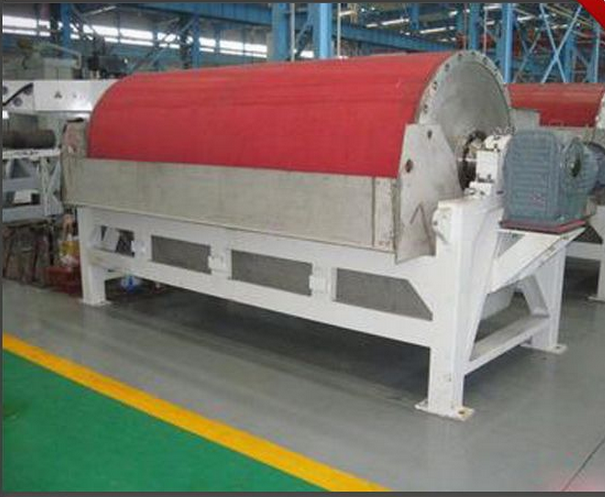
A radial magnetic field is commonly used in drum - type magnetic separators. In this configuration, the magnetic field lines are perpendicular to the surface of the drum. As the mixture passes over the drum, the magnetic particles are attracted to the drum surface along the radial direction. Axial magnetic fields, on the other hand, are often used in tube - type magnetic separators, where the magnetic field lines run parallel to the axis of the tube. Transverse magnetic fields are used in some specialized magnetic separation applications, where the magnetic field is perpendicular to the direction of the material flow.
The choice of magnetic field direction depends on the nature of the material being separated and the desired separation efficiency. For example, in the separation of ferromagnetic particles from a liquid suspension, a radial magnetic field may be more effective in capturing the particles on the surface of a rotating drum.
Practical Considerations in Magnetic Separation
In addition to the scientific principles, there are several practical considerations when using magnetic separation equipment. The flow rate of the material being processed, the particle size distribution, and the magnetic properties of the particles all need to be taken into account.
The flow rate of the material affects the residence time of the particles in the magnetic field. If the flow rate is too high, the magnetic particles may not have enough time to be attracted to the magnetic source, resulting in a lower separation efficiency. On the other hand, if the flow rate is too low, the throughput of the equipment will be reduced.
The particle size distribution also plays a role. Larger particles are generally easier to separate than smaller particles because they experience a larger magnetic force. However, in some cases, small particles may be more strongly magnetic than large particles. Therefore, a comprehensive understanding of the particle size and magnetic properties is necessary to optimize the magnetic separation process.
The Importance of Custom - Designed Magnetic Separation Equipment
As a supplier of magnetic separation equipment, we understand that every customer has unique requirements. That's why we offer custom - designed magnetic separation solutions. By carefully analyzing the magnetic properties of the materials to be separated, the desired separation efficiency, and the operating conditions, we can design and manufacture magnetic separation equipment that meets the specific needs of our customers.
Our team of experts uses advanced simulation software to model the magnetic field distribution in the equipment. This allows us to optimize the design of the magnetic circuit, ensuring that the magnetic field strength, gradient, and direction are precisely tailored to the application. Whether it's a small - scale laboratory application or a large - scale industrial production line, we can provide the most suitable magnetic separation equipment.
Contact Us for Your Magnetic Separation Needs
If you are looking for high - quality magnetic separation equipment, we are here to help. Our extensive range of Magnetic Separation Equipments, including Magnetic Rollers and Magnetic Iron Remover, is designed to provide efficient and reliable separation solutions.
Contact us today to discuss your specific requirements and explore how our magnetic separation equipment can improve your production process.
References
- Chen, J., & Lin, J. (2018). Fundamentals of magnetic separation. Springer.
- Gupta, H. S., & Yan, D. (2006). Mineral processing design and operations: an introduction. Elsevier.
- Svoboda, J., & Fujita, T. (2003). Magnetic techniques for the treatment of materials. Butterworth - Heinemann.