Leading manufacturer of laminated magnets
Laminated Magnets are manufactured by stacking thin magnetic sheets such as NdFeB, SmCo, or Ferrite with precision lamination and bonding techniques. They offer high magnetic performance, excellent mechanical stability, and superior corrosion resistance. As a professional laminated magnets manufacturer, we provide customized laminated magnets for automotive, electronics, and home appliance applications, supporting both OEM and ODM projects with consistent quality and reliable performance.

Benefits of Laminated Magnets
Reduced eddy current losses
One of the main benefits is a significant reduction in eddy current losses. By breaking up the conductive paths within the magnet, the laminated structure limits the formation of eddy currents, which reduces heat generation and reduces energy waste. This not only improves the performance of the device in high-frequency applications, but also extends its service life.
Higher strength
Laminating magnets can increase their mechanical strength and resistance to cracking or chipping. The layers of lamination provide additional structural support, making the magnets more durable in demanding environments. Laminated magnets can be made stronger than solid magnets, making them suitable for applications that require high holding force.
Thermal stability
Another important benefit of laminated magnets is their improved thermal stability. In applications where temperature fluctuations are common, the insulating layer within the magnet helps balance power and heat by reducing the negative effects of eddy currents that can cause overheating. This makes laminated magnets ideal for high-frequency applications such as electric motors, where maintaining optimal temperatures is critical for efficiency and reliability.
Customized
Laminated magnets can be customized to meet specific application needs. Whether you require a specific layer thickness, magnetic orientation, or custom shape and size, laminated magnets can be designed to provide the exact performance characteristics you need. This flexibility, coupled with their enhanced efficiency, makes them a top choice for industries ranging from automotive to renewable energy.
Why Choose Us
Rich Experiences
Founded in 2001, our growing R&D team currently consists of 20 technical engineers dedicated to providing proactive and forward-thinking support to our customers, leading product development and innovation to better serve the current market.
Complete Qualifications
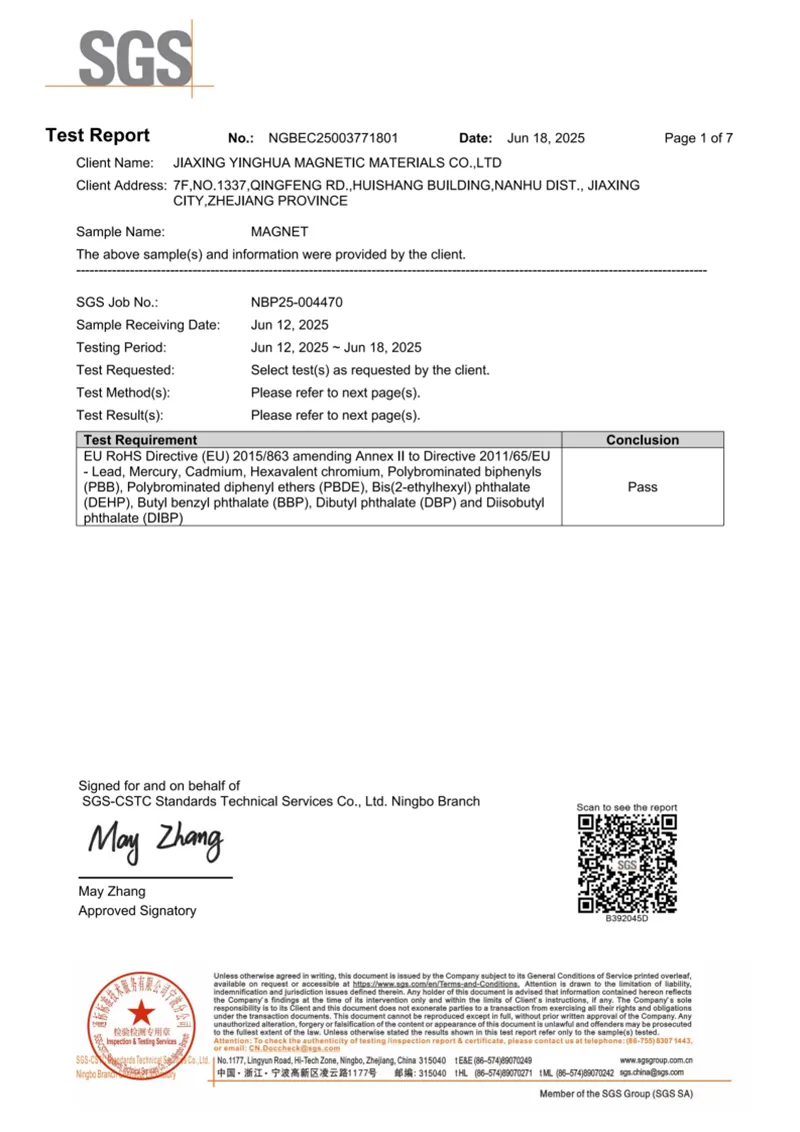
We specialize in Permanent Sintered Neodymium-Ferrum-Boron (NdFeB) magnets, Samarium-Cobalt (SmCo) magnets, Aluminum-Nickel-Cobalt (AlNiCo) magnets, and related assemblies, all ISO9001 and SGS certified.
Strong Production Capability
Our annual output includes 800 tons of NdFeB magnets and 6000 tons of ferrite magnets, along with Alnico, SmCo, and plastic rubber magnets.
After-Sales Services
We provide comprehensive after-sales support, including troubleshooting, repair services, and customer assistance, ensuring satisfaction even after purchase.
1. The consistency of superficial magnetic force is excellent;
2. The unique production way increases the competitive advantage in production efficiency, manufacturing accuracy, and cost control;
3. This magnet has excellent resistance to high temperature and humidity the anti-corrosion properties because of using overall plating surface protection technology;
4. By means of insulated stitching, these small magnets are insulated from each other;
5. The thickness of the insulating layers is within 0.04mm;
6. The bond strength of insulating layers can reach more than 50Mpa at room temperature;
7. The maximum working temperature is up to 200 ℃;
8. The geometric tolerance for the laminated magnet is within±05mm;
9. They are available in samarium cobalt and neodymium iron boron materials;
10. Custom sizes and shapes are acceptable too.

The core materials used in laminated magnets are primarily Neodymium (NdFeB) and Samarium Cobalt (SmCo). Neodymium magnets are well-known for their exceptional magnetic strength, making them the go-to choice for applications requiring powerful magnetic fields. However, they are more susceptible to corrosion and may have lower thermal stability compared to Samarium Cobalt. This is where Samarium Cobalt shines, offering excellent resistance to corrosion and high temperatures, making it ideal for environments where the magnets are exposed to extreme conditions.
The choice between Neodymium and Samarium Cobalt depends on the specific requirements of your application. For instance, if your project demands maximum magnetic strength and operates in a controlled environment, Neodymium might be the best fit. On the other hand, if your application involves high temperatures or corrosive environments, Samarium Cobalt offers superior performance and longevity.
The Difference Between Laminated Magnets and Magnetic Wheels
Strength and Efficiency
In general, laminated magnets are stronger and more efficient than magnetic wheels. This is because laminated magnets are made from high-performance materials that have high coercivity and remanence. Magnetic wheels, on the other hand, have zero friction, which can lead to improved efficiency.
However, the strength and efficiency requirements of a particular application will determine which technology is the best choice. For example, laminated magnets are a better choice for applications that require high holding force, such as electric motors and generators. Magnetic wheels are a better choice for applications that require low friction, such as robotics and automation.
Heat Resistance
Laminated magnets are typically more heat-resistant than magnetic wheels. This is because the magnetic material in laminated magnets is insulated from the surrounding environment, which helps to prevent heat buildup. Magnetic wheels, on the other hand, are exposed to the surrounding environment, which can lead to heat buildup.
Heat resistance is an important consideration for applications where the temperature may be high, such as electric motors and generators. In these applications, laminated magnets are a better choice than magnetic wheels.
Durability and Longevity
Both laminated magnets and magnetic wheels are very durable and can last for many years. However, laminated magnets may be more durable than magnetic wheels, as they are less susceptible to wear and tear. Laminated magnets are made from high-performance materials that are resistant to corrosion and wear. Magnetic wheels, on the other hand, may be more susceptible to wear and tear, especially if they are used in harsh environments.
What Coatings are Available for Laminated Magnets?
Epoxy Coating
Epoxy is a popular choice for its excellent adhesion and resistance to moisture, chemicals, and mechanical stress. It provides a tough, durable finish that protects the magnet layers from corrosion and impact.
Nickel Coating
Nickel is commonly used for its strong corrosion resistance and smooth finish, which can also enhance the magnet’s appearance. A nickel coating is particularly beneficial in applications where the magnet will be exposed to humid or corrosive environments.
Polyimide Coating
Known for its high thermal stability, polyimide is an excellent choice for applications that involve extreme temperatures. This coating provides robust insulation, ensuring that the magnet maintains its performance even in harsh thermal conditions.
Custom Coatings
Depending on your specific needs, we can also provide custom coatings for your application. These coatings may include Teflon for non-stick properties, gold for increased conductivity, rubber for increased impact resistance and grip, parylene, titanium or phosphating, among other diverse options.
How to Choose the Right Laminated Magnet
Magnetic strength is one of the most important performance indicators of laminated magnets. Choose the appropriate magnetic strength according to your needs.
Commonly used magnetic materials include ferrite, samarium cobalt and neodymium iron boron. Different magnetic materials have different properties, so it is necessary to select the appropriate magnetic material according to the needs.
Laminated magnets can be produced in different shapes and sizes. Choose the right shape and size according to your needs.
The heat resistance of laminated magnets depends on the heat resistance of the magnetic material. If you need a magnet used in a high temperature environment, you need to choose a magnetic material with good heat resistance.
The price of laminated magnets depends on factors such as magnetic material, shape and size. Choose the right price according to your budget.
How are Laminated Magnets Made?
Material Selection
Every great product starts with first-class materials, and laminated magnets are no exception. The process begins with selecting the right magnetic material, typically neodymium iron boron (NdFeB) or samarium cobalt (SmCo). NdFeB magnets are known for their high magnetic strength, making them ideal for applications that require strong magnetic fields. On the other hand, SmCo magnets have excellent temperature stability and corrosion resistance, which is critical for environments with extreme conditions. The choice of material depends on the intended application, operating environment, and the required magnetic properties.
Cutting
Once the material is selected, the magnets are cut into thin layers or sheets. This stage requires high-precision cutting technology to ensure uniform thickness, and accuracy is key, as thickness variations can lead to inconsistent magnet performance. The cutting process must be carefully controlled to prevent damage to the material that would compromise its magnetic properties. The goal is to produce layers that are thin enough to minimize eddy currents, but thick enough to maintain structural integrity. We use advanced cutting techniques to create thin layers, each ready to play its role in the final laminated structure.
Bonding
The layers are bonded together to form a cohesive unit using a high-strength adhesive. This bonding process is critical as it ensures that the layers remain firmly connected during the operation of the magnet. Carefully selecting the adhesive to provide a strong bond while also trying to control the consistency of the gap. Avoid affecting the magnetic properties of the layers and ensure that it can withstand the conditions that the magnet will face. In addition, the bonding process must be carried out in a controlled environment to prevent contamination, which can weaken the bond and reduce the overall efficiency of the magnet.
Pressing
After the layers are bonded, a pressing process is required. Pressing helps ensure that the layers fit tightly together without air gaps or imperfections that could degrade the performance of the magnet. The pressure applied at this stage must be carefully calibrated to avoid damaging the delicate layers. Ensuring maximum contact between the magnet layers consolidates the bond between the layers. This step is critical to maintaining the structural integrity of the magnet and ensuring it performs optimally under the stresses of operation.
Final Cutting and Grinding
The final step is to cut and grind the laminated block to exact dimensions. This stage allows the magnet to be precisely tailored to fit the shape and size required for a specific application. Grinding ensures a smooth surface free of imperfections that could affect the magnet’s performance or cause premature wear. The final cutting process also allows the magnet to be tailored to size to ensure it fits the intended application perfectly. Whether it’s a simple rectangle or a more complex shape, we have it covered.
Application of Laminated Magnets
Electric Motors
Laminated magnets are used to enhance the efficiency and performance of BLDC motors by reducing eddy current losses, which is crucial for maintaining high rotational speeds. In PMSMs, laminated magnets help improve the power output and thermal management, especially in electric vehicles and industrial machinery.
Transformers
Laminated magnets are used in high-frequency transformers to minimize core losses and enhance energy transfer efficiency, particularly in power supplies and converters. These magnets are integral to pulse transformers, ensuring precise energy transfer in applications such as telecommunications and digital circuits.
Renewable Energy Generators
Laminated magnets are employed in the rotors of wind turbine generators to reduce energy losses and increase the overall efficiency of power generation. In hydroelectric generators, laminated magnets contribute to reliable and efficient energy conversion, ensuring stable power output.
Magnetic Sensors
Laminated magnets are used in Hall effect sensors to provide consistent magnetic fields, which are essential for accurate position and speed sensing in automotive and industrial applications. These sensors benefit from laminated magnets’ ability to reduce interference from eddy currents, improving sensitivity and precision in applications such as motion detection and navigation systems.
Inductors
Laminated magnets in inductors help manage the magnetic flux and reduce losses, which is vital in applications like RF circuits and power electronics. In choke coils, laminated magnets improve the performance of noise filtering and power conditioning in electrical circuits.
Magnetic Bearings
Laminated magnets are used in active magnetic bearings to provide stable, contact-free support for rotating shafts, which is essential in high-speed applications such as turbines and compressors. In passive magnetic bearings, these magnets reduce friction and wear, contributing to longer service life and improved reliability.
How to Properly Store Laminated Magnets
Use a Magnet Keeper
A laminated magnet keeper is small iron or steel bar that’s used to prevent a permanent magnet from becoming demagnetized. It’s placed across the poles to complete the magnetic circuit and stop external metal from becoming attracted to the magnet.
Store Magnets in Pairs
To prevent the two south or two north laminated magnet poles of different laminated magnets from touching, store your magnets in pairs with the unlike poles on the same side. If both poles of the same alignment (north and north or south and south) are allowed to touch, the magnetic fields will repel and cause the laminated magnet to weaken over time.
Store Dry Place
Laminated magnets can be susceptible to corrosion and rust if stored in damp environments. This can lead an air gap that prevents the magnet from producing a secure bond on ferromagnetic materials. Laminated magnets that become wet can bubble and distort. If you are using a magnet in a wet environment, make sure it’s designed for water and is cleaned and dried regularly.
Avoid Ferromagnetic Storage Containers
Keep your laminated magnets in a non-ferromagnetic or a non-magnetic, iron free container, like a wooden box or a plastic container. This well help prevent your laminated magnets from attracting any metal debris.
Store Away from High Temps
Keep your laminated magnets stored away from heat sources. Prolonged exposure to high temperatures will cause your laminated magnets to weaken over time.
Store Away from Electric Currents
Strong electrical currents can disrupt a laminated magnet’s magnetic field and cause it to demagnetize. Store your laminated magnets away from anything that gives off an electrical current, including microwave ovens, wireless routers and computers, as they can affect the strength of a magnet.
Protect with a Magnetic Assembly
Many magnets are sold as a magnetic assembly, with a protective casing or coating that surrounds the magnet. A magnetic assembly can help protect the surface of the laminated magnet, prevent slippage and can even focus the magnetic force in one direction.
FAQ
As one of the most professional laminated magnets manufacturers and suppliers in China, we're featured by quality products and good service. Please feel free to buy laminated magnets for sale here from our factory.
magnetic ball joint assembly, neodymium magnets 3mm x 1mm, Rectangular Permanent Magnetic Chuck