

Why Choose Us
Technology Innovation
Ltd. has strong technical research and development capabilities and a professional technical team, which can provide customers with cutting-edge magnetic materials and technical solutions. The company has deep technical accumulation and innovation advantages in the field of magnetic materials, which can meet the changing needs of customers.
Customer Service
The company focuses on customer service and support, providing comprehensive pre-sales, sales and after-sales services to ensure that customers receive timely and effective support in the process of use. The company's sales team and technical team have professional knowledge and skills and are able to provide customers with professional advice and solutions.
Customised Service
The company provides customised magnetic material solutions, offering targeted products and services according to customers' specific needs and application scenarios. The company's technical team has a wealth of experience and expertise, and is able to work closely with customers to develop products that meet their specific needs.
Quality and Reliability
The company focuses on product quality and reliability, with a perfect quality management system and advanced production equipment to ensure stable performance and reliable quality. Our products undergo strict testing and screening to ensure compliance with international standards and customer requirements.
Magnetic Grids, also known as Magnetic Grates or Magnetic Grills, are a true masterpiece of advanced technology. These magnetic grids are manufactured using high-energy rare earth neodymium magnets and stainless steel tubes by a unique manufacturing process. The grids are designed to attract even the tiniest particles from the carrier material, ensuring the integrity of your equipment and the safety of your products.


Magnetic Separation Equipments possess the following advantages: Short magnetic circuit, little magnetic flux leakage, high magnetic intensity, low energy consumption, fine beneficiating results, simple structure and convenient maintainance.
Magnetic Separation Equipments is mainly used to clear the ferromagnetic impurities in the powder, flake, granular raw materials and so on, and widely applied in ceramics, electricity, mining, plastics, chemicals, rubber, pharmaceutical, food, environmental protection, pigments, dyes, electronics, metallurgy and other industries.
1.Frame and tube material is 304 or 316L stainless steel,good corrosion resistance and no pollution.
2.Standard magnetic grates are assembled with stainless steel frame and 25mm diameter round bars.
3.The frame and magnetic bar surface can be fine polished and full welded to meet food grade or pharmacy application.
4.Standard working temperature<=80℃, if needed , max . working temperature from 80℃ to 350℃ is also available.
Our factory is one of the best Magnetic Separation Equipments manufacturers and suppliers in China. We have quality Magnetic Separation Equipments for sale. Welcome all the buyers around the world to contact with us.
Simple To Install And Easy To Clean
After installing magnetic grates(magnet grids), there’s a good chance you won’t even notice it being there. Our magnetic grates can be installed on a hopper, bin, or chute. It won’t slow down the process like other magnetic tools. Ferrous metals will stick behind as the good stuff moves on as usual.
Manufactured With Adaptable
We deal single magnetic tubes to construct grates, or complete grates designed for various applications. Whether you need a square magnetic grate or a circle one, from 6×6 to 40×40, we can come up with something that fits the task at hand. Just give us a call to see what we can do to make your job easier.
Won’t Let Anything Slip By
Chances are if you’re investing in the removal of ferrous tramp metal materials, it’s important to get at every last bit of it. You can rest assured that our magnetic products are powerful enough to get the job done right. Our rare earth-neodymium magnetic grates will lift micron-sized particles that might have otherwise been left behind.
Handle With Care
Depending on what industry you’re in, other magnets might not be practical for the job. They may not even be safe with the product you’re handling. Our magnetic grates(magnetic grills), however, come in both food grade and pharmaceutical grade finishes. Don’t worry you worry, though; our grates will also stand up to the harshest and most demanding jobs.
Functions of Magnetic Grids
High-strength magnets
High-strength magnets are used to provide greater magnetic force and better capture of fine ferrous particles. This is particularly important for applications with large volumes of material, where high magnetic strength is necessary to capture even the smallest particles.
Easy-clean designs
Magnetic grates magnetic grills can be designed to be easy to clean, either manually or automatically. This is particularly important for applications where downtime for cleaning is costly or time-consuming.
Quick-release mechanisms
Quick-release mechanisms are used to enable rapid removal and replacement of the magnetic grates or grids. This feature is particularly useful for applications where frequent cleaning or maintenance is required.
Stainless steel construction
Grate and grid magnets can be manufactured from stainless steel to provide greater durability and resistance to corrosion. This is particularly important for applications where the material being processed is wet or acidic.
Ceramic or rare-earth magnets
Ceramic magnets are a low-cost option for standard applications, while rare-earth magnets offer higher magnetic force and can capture finer ferrous particles. The choice of magnet type depends on the specific application requirements.
Customized shapes and sizes
Magnetic grid separators can be customized to meet specific application requirements in terms of size, shape, and magnetic strength.
Sealed construction
Magnetic grate separators can be designed with a sealed construction to prevent product contamination and reduce the risk of damage to the magnet.
Multiple rows
Multiple rows of magnetic grates or grids can be used to increase the magnetic strength and improve the capture of ferrous contaminants.
Application Areas for Magnetic Grids
Food And Beverage Processing
• Removing ferrous contaminants from raw materials: Grid and grate magnets effectively remove metal shavings, screws, bolts, and other ferrous contaminants from raw materials like grains, fruits, vegetables, and meat before they enter the production line. This ensures product quality and safety by preventing contamination and potential harm to consumers.
• Maintaining regulatory compliance: Food and beverage manufacturers are subject to strict regulations regarding product safety and hygiene. Grid and grate magnets help companies comply with these regulations by ensuring that their products are free from metal contamination.
Plastics Industry
• Protecting plastic processing equipment from damage caused by ferrous contamination: Magnetic grate separators are used in the plastics industry to remove metal contaminants from plastic pellets, powders, and other materials before they enter the processing equipment. This prevents damage to extruders, injection molding machines, and other equipment, reducing downtime and maintenance costs.
• Improving the quality of plastic products: By removing metal contaminants, grid and grate magnets help improve the quality of plastic products by preventing discoloration, surface defects, and other imperfections.
Chemical Processing
• Extracting ferrous materials from powders, liquids, and slurries: Grid and grate magnets are used to remove ferrous contaminants from various chemical products, ensuring product purity and preventing damage to equipment.
• Protecting pumps and valves: By removing metal contaminants, grid and grate magnets protect pumps and valves from damage caused by abrasion and wear, ensuring smooth operation and reducing maintenance costs.
Recycling And Waste Management
• Recovering ferrous metals from mixed waste streams: Grid magnets separator are used in recycling facilities to recover ferrous metals from mixed waste streams, increasing recycling efficiency and reducing the amount of waste sent to landfills.
• Protecting equipment: By removing ferrous contaminants from waste streams, grid and grate magnets protect recycling equipment from damage and wear, reducing maintenance costs and downtime.
Pharmaceuticals
• Ensuring the purity of pharmaceutical ingredients: Grid and grate magnets are used in the pharmaceutical industry to remove metal contaminants from pharmaceutical ingredients, ensuring the purity and safety of medications.
• Protecting equipment: Removing metal contaminants from pharmaceutical products protects processing equipment from damage and wear, ensuring consistent product quality and reducing production costs.
Paper And Pulp Industry
• Removing metal contaminants from wood pulp and paper: Magnetic grills are used in the paper and pulp industry to remove metal contaminants from wood pulp and paper before they are processed into finished products. This prevents damage to papermaking equipment and ensures the quality of the finished paper.
• Improving the appearance of paper: Removing metal contaminants also improves the appearance of paper by preventing streaks, spots, and other imperfections.
Textile Industry
• Removing metal contaminants from fibers and yarns: Magnetic Grid separators are used in the textile industry to remove metal contaminants from fibers and yarns before they are woven or knitted into fabrics. This prevents damage to textile machinery and ensures the quality of the finished fabric.
• Improving the appearance of fabrics: Removing metal contaminants also improves the appearance of fabrics by preventing snags, tears, and other imperfections.
Pigment Industry
• Removing metal contaminants from pigments and dyes: Grid magnets separator are used in the pigment industry to remove metal contaminants from pigments and dyes before they are used in paints, inks, and other products. This prevents discoloration, fading, and other quality issues in the finished product.
• Protecting equipment from damage: Removing metal contaminants also protects equipment used in the pigment and dye production process from damage caused by abrasion and wear.
What is Magnetic Bars
A magnet bar is a rectangular piece of an object, made up of iron, steel or any other ferromagnetic substance or ferromagnetic composite, that shows permanent magnetic properties. It has two poles, a north and a south pole such that when suspended freely, the magnet aligns itself so that the northern pole points towards the magnetic north pole of the earth.
Simplicity: Magnetic bar have a straightforward design, making them easy to understand and use. They typically have a north and south pole, which is intuitive for educational purposes.
Strong magnetic field: They can produce a strong and stable magnetic field, which is beneficial for applications like magnetic compasses, magnetic locks, and various scientific experiments.
Versatility: Magnetic bar can be used in a wide range of applications, including motors, generators, magnetic separators, and in devices like refrigerator magnets.
Durability: Many magnetic bar are made from materials like neodymium or ferrite, which can be highly durable and resistant to demagnetization over time, especially if properly cared for.
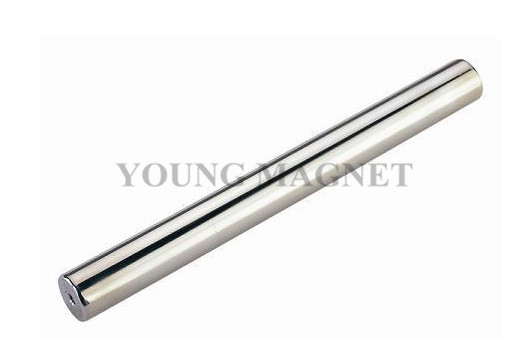

Cost-effective: Magnetic bar are generally inexpensive to produce and purchase, making them accessible for both industrial and educational purposes.
Ease of handling: Their shape and size make them easy to handle and manipulate, which is particularly beneficial in classroom settings for demonstrations and experiments.
Alignment: Magnetic bar can be easily aligned in specific orientations, allowing for precise applications in magnetic fields.
Non-electric: They do not require electricity to function, making them useful in situations where power sources are unavailable or impractical.
Applications of Magnetic Bars
Motors
magnetic bars are used in motors to generate rotational motion. In an electric motor, a coil of wire is placed in the magnetic field of a magnetic bar, and the resulting force causes the coil to rotate. This motion is then used to power mechanical devices such as fans, pumps, and other equipment.
Generators
magnetic bars are also used in generators to generate electricity. In a generator, a coil of wire is rotated in the magnetic field of a magnetic bar, and the resulting movement of the wire generates an electric current.
Scientific experiments
magnetic bars are often used in scientific experiments and demonstrations to illustrate the properties of magnetism. For example, they can be used to demonstrate how magnets attract and repel each other or how they can be used to create a magnetic field.
Magnetic therapy
magnetic bars are sometimes used in alternative medicine to help relieve pain and promote healing. They are believed to work by increasing blood flow to the area of the body where they are applied.
Properties of Magnet Bar
A magnetic bar possesses certain properties which are listed below:
• Like other magnets, a magnetic bar also has two poles, I. e. the north pole and the south pole. No matter how many times a magnetic bar is broken, or how small or large the magnet is, it will always have two poles.
• The magnetic force of a magnetic bar gets stronger as we move towards the poles, and gets weaker in the middle of the magnet.
• When kept together, the opposite pole of the two magnetic bars will experience attractive force while if the like poles come in contact they will repel each other.
• They remain and act such for their lifetime so as not lose their magnetism over time.
• Magnetic bars are strongest at both the poles and get weak in the centre part of it.
• When suspended freely in the environment, the north pole of the magnetic bar points toward the south pole of the earth, and the south pole of the magnetic bar faces toward the north pole, and as a result, aligns itself with earth's magnetic field.
• The magnetic bar attracts iron, steel, and other ferro magnetic substances which come in contact with its magnetic field.
Our Factory
Shanghai Young Magnet Co., Ltd. is a premier magnet manufacturer in China, boasting over 10 years of expertise in the magnetic material industry and an annual production capacity of 800 tons.
We specialize in Permanent Sintered Neodymium-Ferrum-Boron (NdFeB) magnets, Samarium-Cobalt (SmCo) magnets, Aluminum-Nickel-Cobalt (AlNiCo) magnets, and related assemblies, all ISO9001 and SGS certified.
Our primary markets include the Americas, Europe, the Middle East, Korea, Japan, Hong Kong, Taiwan, and China.
Based in Shanghai, we integrate research, development, production, and sales of new materials. Our annual output includes 800 tons of NdFeB magnets and 6000 tons of ferrite magnets, along with Alnico, SmCo, and plastic rubber magnets.
Committed to high reliability and quality, innovation, and customer satisfaction, our products are globally used in automotive, home appliances, audio equipment, communication equipment, and new energy fields like wind power.
With rich experience and expertise, we offer comprehensive technical support and personalized service. We transitioned from producing ferrite powder to finished Ferrite and NdFeB magnets, establishing an overseas sales division in 2013 and Young Magnet (HK) Co., Ltd. in 2015.


FAQ
As one of the most professional magnetic separation equipments manufacturers and suppliers in China, we're featured by quality products and good service. Please feel free to buy magnetic separation equipments for sale here from our factory.
double drum magnetic separator, magnetic lifter 500kg, magnetic separator for belt conveyor