

Hey there! As a supplier of Bonded NdFeb Magnets, I've gotten a ton of questions about how these bad boys perform in vacuum environments. So, I thought I'd sit down and share what I know.
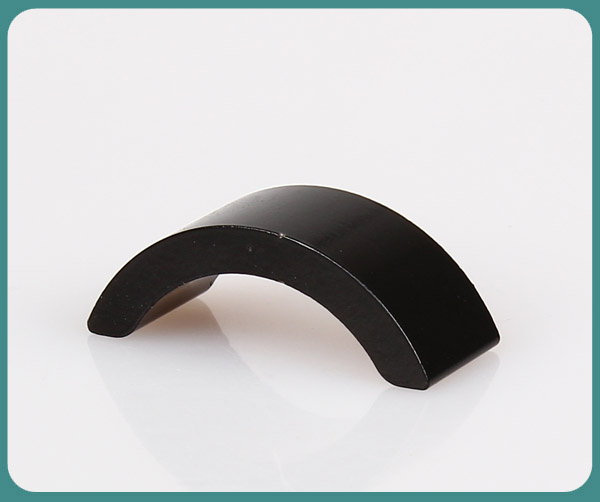
First off, let's talk a bit about what Bonded NdFeb Magnets are. They're made by mixing NdFeb magnetic powder with a polymer binder. This process gives them some unique properties compared to other types of magnets. We offer different shapes like Bonded Arc NdFeb Magnets and Bonded Block NdFeb Magnets. These magnets are super versatile and are used in all sorts of applications, from small electronic devices to large industrial machinery.
Now, onto the main topic - how do they do in a vacuum? Well, one of the great things about Bonded NdFeb Magnets is their stability. In a vacuum, there's no air to cause oxidation or other forms of corrosion. Unlike some other metals that can react with the oxygen in the air, these magnets don't have that problem. This means they can maintain their magnetic properties for a really long time.
The polymer binder in Bonded NdFeb Magnets also plays a crucial role. It acts as a protective layer, preventing the magnetic powder from being exposed to any potential contaminants that might be present in a vacuum environment. This protection helps keep the magnet's performance consistent over time.
Another aspect to consider is the temperature in a vacuum. In space or other vacuum - like conditions, temperatures can vary wildly. Bonded NdFeb Magnets have a relatively good temperature stability. They can handle a wide range of temperatures without losing their magnetic strength too much. However, it's important to note that extreme temperatures can still have an impact. At very high temperatures, the polymer binder might start to degrade, which could affect the magnet's overall performance. But within a reasonable temperature range, they hold up pretty well.
When it comes to vibration and shock, Bonded NdFeb Magnets are also quite resilient. In a vacuum, there's no air to dampen vibrations. But the structure of these magnets, with the powder held together by the binder, can absorb some of the shock. This makes them suitable for applications where there might be a lot of movement or vibrations, like in satellites or other space - based equipment.
Let's take a look at some real - world applications. In the aerospace industry, Bonded NdFeb Magnets are used in various systems. For example, they can be found in the actuators of satellite control systems. In a vacuum environment, these magnets need to work flawlessly to ensure the proper functioning of the satellite. Their stability and reliability make them a top choice for such critical applications.
In the semiconductor manufacturing industry, vacuum chambers are used for processes like deposition and etching. Bonded NdFeb Magnets can be used in the motors and sensors within these chambers. Their ability to perform well in a vacuum helps keep the manufacturing process running smoothly and efficiently.
Now, if you're thinking about using Bonded NdFeb Magnets in your vacuum - related application, there are a few things to keep in mind. First, you need to make sure you choose the right grade of magnet for your specific needs. Different grades have different magnetic strengths and temperature stabilities. Second, proper handling and installation are crucial. Even though these magnets are pretty tough, rough handling can still damage them.
We also offer Bonded Arc Neodymium Magnets, which are great for applications where a curved shape is required. Whether it's for a special - shaped motor or a custom - designed sensor, these magnets can be a perfect fit.
In conclusion, Bonded NdFeb Magnets have some really great characteristics that make them well - suited for vacuum environments. Their stability, temperature resistance, and shock absorption capabilities are just a few of the reasons why they're used in so many high - tech applications.
If you're in the market for Bonded NdFeb Magnets for your vacuum - related project, I'd love to have a chat with you. We can discuss your specific requirements and find the best solution for you. Whether you need a small quantity for a prototype or a large order for mass production, we've got you covered. So, don't hesitate to reach out and start a conversation about your magnet needs.
References
- "Magnetics Handbook", McGraw - Hill
- Industry reports on aerospace and semiconductor manufacturing using NdFeb magnets.