

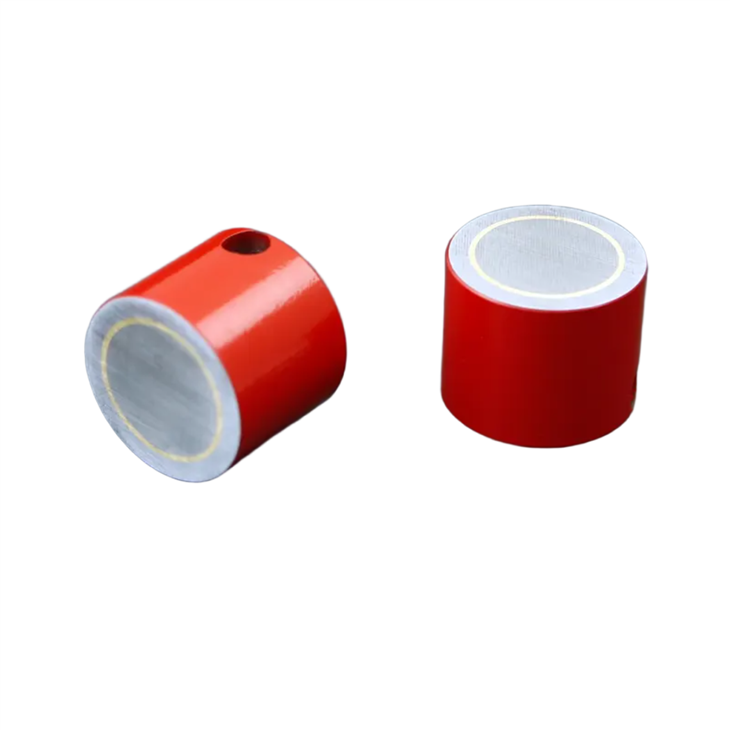
Product Overview
Rubber coated pot magnets integrate permanent magnet cores, precision-machined steel housing shells, and protective elastomer outer layers into single magnetic mounting components. The rubber encapsulation creates a non-metal contact interface designed to prevent scratching, improve slip resistance, and protect finished or painted mounting surfaces. Meanwhile, the internal steel shell focuses magnetic flux toward the working face to maximize holding performance.
These assemblies are specified for removable mounting, positioning fixtures, signage, temporary lighting, industrial enclosures, and original equipment assemblies where direct metal-to-metal contact between a standard magnetic housing and a sensitive substrate is unacceptable.
Technical Specifications
|
Specification Parameter |
Engineering and Purchasing Consideration |
|
Magnet Material |
Determines base magnetic performance (NdFeB for high force, Ferrite for cost-effective or high-temp use). |
|
Magnet Grade |
Dictates energy product and operational stability. |
|
Pot Housing Diameter |
Defines the external footprint and available magnetic surface area. |
|
Overall Height |
Critical for installation within restricted mechanical depth limits. |
|
Holding Force |
Primary performance metric, tested under specified plate thickness and pull conditions. |
|
Thread Configuration |
Internal threads, external studs, or through-holes matching standard hardware. |
|
Rubber Thickness |
Balances surface protection, friction coefficient, and magnetic air gap losses. |
|
Rubber Material |
Determines chemical resistance, environmental durability, and operating temperature range. |
|
Operating Temperature |
Maximum working threshold defined by magnet grade and elastomer degradation limits. |
|
Surface Finish |
Corrosion resistance of exposed metal components and housing. |
Key Structural Components
Magnet Core: NdFeB (Neodymium) or Ferrite, selected according to required magnetic energy.
Pot Housing: Cold-rolled or turned steel shell for structural support and flux redirection.
Encapsulation Layer: Protective rubber or elastomer coating.
Mounting Interface: Internal threaded bushing, external threaded stud, countersunk hole, or custom mechanical attachment.
Magnetization Direction: Axial, aligned with the assembly design.
Typical Industrial Applications
Industrial Equipment: Removable mounting of machine guards, inspection covers, temporary brackets, sensors, and utility tools.
Signage and Displays: Positioning retail displays, exhibition fixtures, and temporary promotional signs without marring finished surfaces.
Lighting Fixtures: Temporary or adjustable lighting mounts where secure attachment is required without exposing supporting panels to bare steel housings.
Automotive and Mobile Equipment: Removable interior fixtures, positioning aids, and auxiliary equipment mounts subject to vibration and surface protection requirements.
Fixtures and Jigs: Temporary holding devices, welding fixtures, and alignment tools that require frequent repositioning.
Customization Capabilities and OEM Support
Standard catalog dimensions suit many mounting requirements, but original equipment projects often necessitate tailored engineering configurations. Custom development options include:
Non-Standard Dimensions
Specific pot diameters and tailored overall heights.
Alternative Magnet Grades
High-performance NdFeB grades or temperature-resistant Ferrite alternatives.
Tailored Threads
Customized metric, imperial, internal, or external thread configurations.
Specialized Elastomers
Customized rubber hardness, chemical resistance, thickness, or designated colors.
Engineering Review
Collaborative drawing evaluation and prototype sampling prior to volume manufacturing.
Manufacturing and Quality Assurance
Consistent production relies on stringent controls across both magnetic and mechanical manufacturing stages.
Magnetic Core Inspection: Verification of material grade, dimensional tolerances, remanence, and magnetization orientation.
Steel Housing Machining: Dimensional checks on outer diameter, height, concentricity, and thread precision prior to assembly.
Rubber Encapsulation Control: Monitoring of rubber thickness, surface uniformity, bonding integrity, and freedom from voids or cracking.
Finished Assembly Testing: Verification of overall dimensions, thread fit, visual appearance, and pull-force verification against engineering standards.
Packaging and Export Logistics
To prevent transit damage, magnetic interference, and elastomer wear during international shipping, export orders utilize specialized packaging protocols:
Magnetic Shielding
Strategic spacing and iron-keeper insertion to neutralize external magnetic fields.
Impact Protection
Individual separation layers and shock-absorbing cushioning materials.
Moisture Defense
Corrosion-resistant interleaving and protective wrapping for ocean and air freight.
Frequently Asked Questions
Q: What is the effect of the rubber coating on holding force compared to standard bare pot magnets?
A: The rubber layer introduces a non-magnetic gap between the magnet face and the target steel plate. While this increases the magnetic air gap and slightly reduces theoretical maximum pull force compared to a bare steel housing of the same size, it prevents sudden slip and provides essential surface protection. Holding force should always be evaluated using test data that accounts for the specific rubber thickness and application load direction.
Q: What type of rubber material is used for the coating, and what are its environmental limits?
A: Standard assemblies typically utilize durable synthetic elastomers designed to resist environmental wear, moderate UV exposure, and oil traces. For specialized environments involving continuous high temperatures, aggressive chemicals, or outdoor weathering, alternative elastomer compounds can be specified during the engineering review stage.
Q: Can these magnets be used on vertical surfaces or ceilings without sliding?
A: Yes, but application orientation directly affects performance. When mounted on vertical walls or inverted ceilings, the load is subjected to shear force rather than a direct perpendicular pull. The high-friction elastomer surface helps resist lateral sliding, but safety margins must be adjusted upward for shear-load installations, especially under vibration.
Q: Are metric and imperial thread options both available?
A: Standard configurations are produced with common metric threads such as M4, M5, M6, M8, and M10 depending on the pot diameter. Imperial thread sizes or custom stud configurations can also be custom-manufactured for specific original equipment requirements.
Q: What is the standard sample policy for OEM projects or custom designs?
A: For custom or project-specific configurations, engineering teams review 2D or 3D drawings, evaluate magnetic and mechanical parameters, and provide prototype samples for physical testing and validation before proceeding to full-scale mass production.
Hot Tags: rubber coated pot magnets, China rubber coated pot magnets manufacturers, suppliers, factory, Alnico U Channel Magnet, pot magnets for conversion rate optimization projects, pot magnets for hobby projects, pot magnets for magnetic separators, pot magnets for prototyping projects, pot magnets for security projects