

Hey there! As a supplier of SmCo Disc, I often get asked about what the remanence of SmCo Disc is. So, I thought I'd write this blog to share some insights on this topic.
First off, let's talk a bit about SmCo Discs. SmCo, or Samarium Cobalt, is a type of rare - earth magnet. These magnets are known for their excellent magnetic properties, high resistance to demagnetization, and good performance at high temperatures. SmCo Discs are just one of the many shapes in which SmCo magnets are available. They're used in a wide range of applications, from aerospace and defense to electronics and medical devices.
Now, what exactly is remanence? Well, remanence, also known as residual induction or residual magnetic flux density, is a measure of the magnetic field that remains in a magnet after it has been magnetized and the external magnetic field is removed. In simpler terms, it's like the "memory" of the magnet. It tells us how strong the magnet will be on its own once it's been charged up.
For SmCo Discs, the remanence is quite impressive. The remanence values of SmCo magnets typically range from around 0.7 to 1.2 Tesla (T). The exact remanence of an SmCo Disc depends on several factors, such as the specific alloy composition, the manufacturing process, and the orientation of the magnetic domains within the magnet.
There are different types of SmCo magnets, and they have different remanence characteristics. For example, SmCo5 Magnets are one of the early types of SmCo magnets. They usually have a remanence in the range of 0.7 - 0.9 T. These magnets are known for their relatively simple crystal structure, which gives them good thermal stability.
On the other hand, the more advanced Sm2Co17 type of SmCo magnets can have a remanence of up to 1.2 T. The Sm2Co17 magnets have a more complex crystal structure, which allows for a higher magnetization and thus a higher remanence. This makes them suitable for applications where a stronger magnetic field is required.
When it comes to the manufacturing of SmCo Discs, the process plays a crucial role in determining the remanence. The powder metallurgy process is commonly used. In this process, the raw materials (samarium, cobalt, and other alloying elements) are first mixed and then melted to form an alloy. This alloy is then crushed into a fine powder. The powder is then compacted into the desired shape (in this case, a disc) under a high - pressure press. After that, the compacted disc is sintered at a high temperature to form a solid magnet. Finally, the magnet is magnetized to achieve the desired magnetic properties.
During the manufacturing process, the orientation of the magnetic domains is also carefully controlled. By aligning the magnetic domains in a specific direction, we can maximize the remanence of the SmCo Disc. This is usually done by applying a strong magnetic field during the compaction or sintering process.

The high remanence of SmCo Discs makes them very useful in many applications. In aerospace, they can be used in actuators, sensors, and motors. The high - temperature stability and strong magnetic field of SmCo Discs are essential in these applications, as they need to operate in harsh environments.
In the electronics industry, SmCo Discs are used in hard disk drives, speakers, and magnetic resonance imaging (MRI) machines. In hard disk drives, the strong magnetic field of the SmCo Disc helps to store and read data more efficiently. In speakers, it provides a powerful magnetic field that allows for better sound quality. And in MRI machines, the high - quality magnetic field of SmCo Discs is crucial for generating clear and accurate images.
Another important application is in the medical field. SmCo Discs can be used in dental implants and orthopedic devices. The biocompatibility and strong magnetic properties of these magnets make them suitable for these applications. They can help in holding the dental implants in place or providing a stable magnetic field for orthopedic devices.
If you're considering using SmCo Discs in your project, it's important to understand the remanence and how it relates to your specific requirements. You need to think about the strength of the magnetic field you need, the operating temperature, and the size and shape of the magnet.
As a supplier, I can offer a wide range of SmCo Discs with different remanence values to meet your needs. Whether you need a SmCo5 Magnets with a relatively lower remanence for a low - power application or a Sm2Co17 magnet with a high remanence for a high - performance project, I've got you covered.
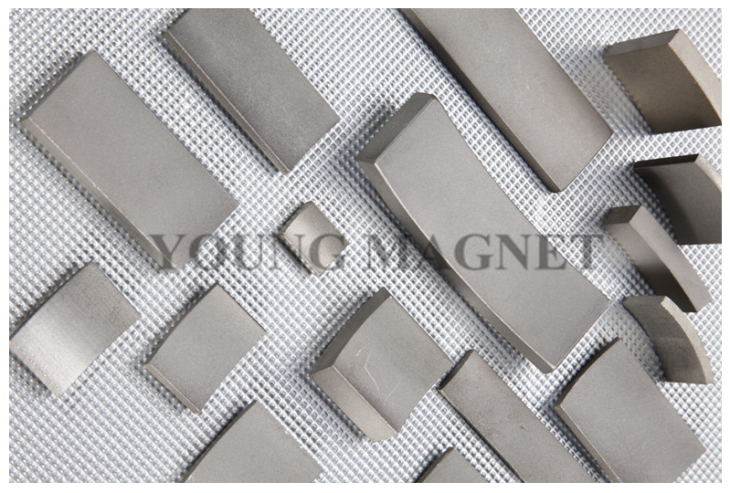
We also offer SmCo Segment and other types of SmCo Magnets in addition to the discs. These magnets can be customized in terms of size, shape, and magnetic properties according to your specific requirements.
If you're interested in purchasing SmCo Discs or any other SmCo magnets, I'd love to have a chat with you. We can discuss your project in detail, and I can help you choose the right magnet with the appropriate remanence for your application. So, don't hesitate to reach out and start the conversation about your magnet needs.
References
- Handbook of Magnetic Materials
- Journal of Applied Physics (articles related to rare - earth magnets)
- Proceedings of the International Magnetics Conference