

Hey there! I'm a supplier of Bonded NdFeb Magnets, and today I wanna chat about the relationship between the density and magnetic properties of these awesome magnets.
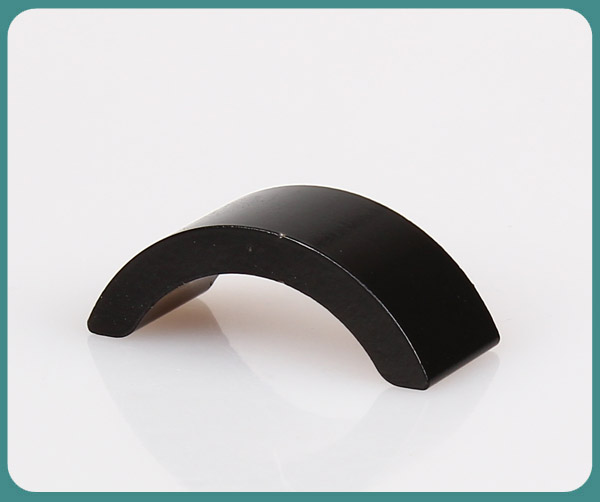
Let's start with a bit of background. Bonded NdFeb magnets are pretty popular in a whole bunch of industries. They're made by mixing NdFeb magnetic powder with a polymer binder. You can find different shapes of these magnets, like Bonded Block NdFeb Magnets and Bonded Arc Neodymium Magnets. They're used in things like motors, sensors, and audio equipment because of their strong magnetic properties.
Now, density plays a crucial role in how these magnets perform. Density is basically how much mass is packed into a certain volume. In the case of Bonded NdFeb magnets, a higher density usually means more magnetic powder is packed into the same space.
When we talk about magnetic properties, there are a few key things to consider: remanence (Br), coercivity (Hc), and energy product (BH)max. Remanence is the magnetic field that remains in the magnet after it's been magnetized. Coercivity is the ability of the magnet to resist demagnetization. And the energy product is a measure of the magnet's strength.
So, how does density affect these magnetic properties? Well, generally speaking, as the density of the Bonded NdFeb magnet increases, the remanence also goes up. This is because with a higher density, there are more magnetic particles close together. These particles can interact better, creating a stronger magnetic field. Think of it like a team of people working together. If there are more people in a small area, they can coordinate better and get more work done. In the same way, more magnetic particles in a small volume can generate a stronger magnetic field.
Coercivity is also influenced by density. A higher density can lead to better alignment of the magnetic particles. When the particles are well - aligned, it's harder for an external magnetic field to demagnetize the magnet. So, the coercivity increases. It's like having a well - organized army. If the soldiers are lined up in an orderly way, it's more difficult for the enemy to break through.
The energy product (BH)max is closely related to both remanence and coercivity. Since a higher density can boost both remanence and coercivity, it usually results in an increase in the energy product as well. This means the magnet is stronger overall and can do more work.
But it's not all straightforward. There are some limitations. If we try to increase the density too much, the binder might not be able to hold all the magnetic particles properly. This can lead to cracks or a decrease in the mechanical properties of the magnet. Also, if the particles are packed too tightly, there might be some internal stress, which can actually reduce the magnetic performance in some cases.
Another factor to consider is the manufacturing process. The way we make the Bonded NdFeb magnets can affect the density and, in turn, the magnetic properties. For example, the pressure applied during the molding process can change the density. If we apply more pressure, we can usually get a higher density. But again, we have to be careful not to overdo it.

We also need to think about the binder material. Different binders have different properties. Some binders can hold more magnetic powder without losing their binding ability, which allows for a higher density. But other binders might not be as good at this. So, choosing the right binder is crucial for getting the optimal density and magnetic properties.
In real - world applications, understanding the relationship between density and magnetic properties is super important. For example, in a motor, a stronger magnet (with a higher energy product) can make the motor more efficient. It can convert electrical energy into mechanical energy better, which means less energy is wasted as heat. This is not only good for the environment but also saves money in the long run.
If you're in an industry that uses Bonded Neodymium Magnets, you need to think about the density of the magnets you're using. You might want to work with a supplier (like me!) who can help you choose the right density for your specific application.
Let's say you're making a small, high - performance motor. You'd probably want a Bonded NdFeb magnet with a relatively high density to get the best magnetic performance. On the other hand, if you're making a sensor where the mechanical flexibility of the magnet is more important, you might be willing to sacrifice a bit of density to get a more flexible magnet.
In conclusion, the density of Bonded NdFeb magnets has a significant impact on their magnetic properties. By carefully controlling the density during the manufacturing process, we can optimize the magnet's performance for different applications.
If you're interested in learning more about Bonded NdFeb magnets or if you're looking to purchase them for your project, feel free to reach out. We can have a chat about your specific needs and find the best solution for you. Whether you need a magnet with a high density for maximum strength or a more flexible magnet with a lower density, we've got you covered.
References
- "Permanent Magnet Materials and Their Applications" by E. C. Stoner and E. P. Wohlfarth
- "Magnetism and Magnetic Materials" by David Jiles