

Hey there! As a supplier of sintered NdFeb magnets, I've been getting a lot of questions lately about how these powerful little magnets affect the recording density of magnetic recording media. So, I thought I'd take a few minutes to break it down for you and explain the science behind it.
First off, let's talk about what sintered NdFeb magnets are. NdFeb stands for Neodymium, Iron, and Boron, which are the main elements that make up these magnets. They're created through a process called sintering, which involves heating and compacting the raw materials to form a solid magnet. The result is a magnet that's incredibly strong, with a high magnetic energy product and excellent coercivity.
Now, let's move on to magnetic recording media. This includes things like hard drives, magnetic tapes, and floppy disks. These devices work by using a magnetic field to store data in the form of tiny magnetic domains on a surface. The more densely these domains can be packed together, the higher the recording density of the media.
So, how do sintered NdFeb magnets come into play? Well, these magnets are often used in the read/write heads of magnetic recording devices. The read/write head is responsible for both reading the data stored on the media and writing new data to it. By using a sintered NdFeb magnet in the read/write head, manufacturers can create a stronger magnetic field, which allows for more precise control over the magnetic domains on the media.
One of the key factors that affects recording density is the size of the magnetic domains. The smaller the domains, the more data can be stored in a given area. Sintered NdFeb magnets can help to create smaller magnetic domains by providing a stronger and more focused magnetic field. This allows for more precise writing and reading of data, which in turn increases the recording density of the media.
Another important factor is the stability of the magnetic domains. Over time, the magnetic fields in a recording device can cause the domains to shift or lose their magnetization, which can lead to data loss or errors. Sintered NdFeb magnets have excellent coercivity, which means they're resistant to demagnetization. This helps to ensure the stability of the magnetic domains on the media, which is essential for maintaining high recording density over time.

In addition to their strength and stability, sintered NdFeb magnets are also very small and lightweight. This makes them ideal for use in compact magnetic recording devices, such as laptop hard drives and mobile phones. By using these magnets, manufacturers can create smaller and more efficient devices without sacrificing performance.
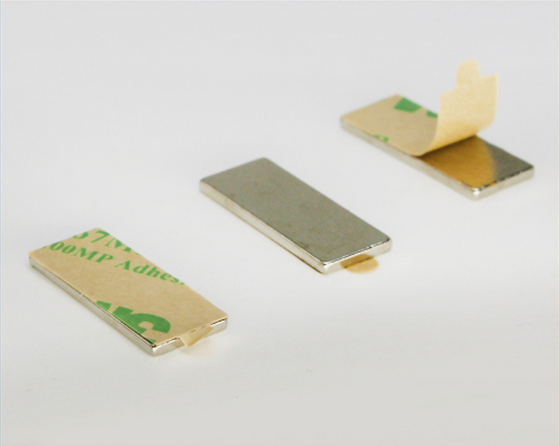
Now, let's take a look at some of the specific types of sintered NdFeb magnets that are commonly used in magnetic recording applications. One popular option is NdFeb Adhesive Backed Magnets. These magnets have a layer of adhesive on one side, which makes them easy to attach to the read/write head of a recording device. They're also available in a variety of shapes and sizes, so you can choose the one that's best suited for your application.
Another type of magnet that's commonly used is Neodymium Adhesive Backed Magnets. These magnets are similar to NdFeb Adhesive Backed Magnets, but they have a slightly different composition. They're also very strong and have excellent coercivity, making them a great choice for high-density recording applications.
Finally, NdFeb Ring Magnets are another option that's often used in magnetic recording devices. These magnets have a circular shape, which makes them ideal for use in rotating components, such as the spindle motors in hard drives. They can also be used to create a uniform magnetic field around the read/write head, which helps to improve the accuracy and reliability of the recording process.
In conclusion, sintered NdFeb magnets play a crucial role in the performance of magnetic recording media. By providing a stronger and more focused magnetic field, these magnets allow for more precise control over the magnetic domains on the media, which in turn increases the recording density. They also help to ensure the stability of the magnetic domains over time, which is essential for maintaining high data integrity. If you're in the market for sintered NdFeb magnets for your magnetic recording applications, I'd be happy to help. Just reach out, and we can discuss your specific needs and find the right solution for you.
References
- "Magnetic Recording Technology" by John C. Mallinson
- "Neodymium Magnets: Properties, Applications, and Future Trends" by David Jiles