

As permanent magnet technology continues to evolve, engineers, product designers, and OEM sourcing teams are facing a common question during product development:
Should you choose sintered NdFeB magnets or bonded NdFeB magnets?
Both materials are based on neodymium-iron-boron magnetic technology, but their manufacturing processes, performance characteristics, design flexibility, and cost structures are significantly different.
Choosing the wrong type can result in oversized components, unstable performance, unnecessary tooling costs, or reduced product lifespan. Choosing the right one can improve product efficiency, lower assembly complexity, and optimize long-term manufacturing cost.
Company overview
Shanghai Young Magnet Co., Ltd. is a professional manufacturer specializing in customized NdFeB magnetic materials and magnetic assemblies for global OEM customers.
With extensive manufacturing experience in both sintered and bonded magnetic technologies, the company provides solutions for industries including:
- Automotive systems
- Industrial automation
- Consumer electronics
- Medical devices
- Renewable energy
Core strengths include:
- Custom engineering support
- Rapid prototyping
- Precision molding
- Advanced magnetization technology
- Global export experience
Whether your project requires maximum magnetic force or complex structural integration, Shanghai Young Magnet can support every stage from design to mass production.
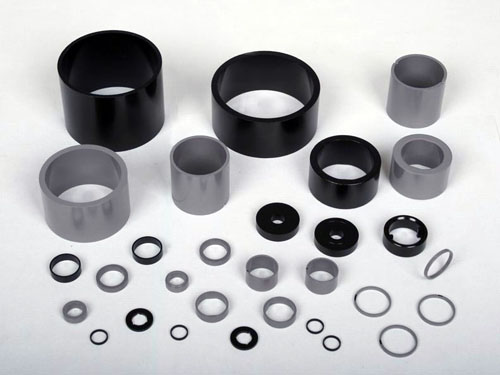


Understanding the Two Manufacturing Technologies
Before comparing performance, it is important to understand how these magnets are made.
Sintered NdFeB Magnets
Sintered magnets are manufactured through powder metallurgy. Rare earth alloy powder is pressed into shape under a magnetic field, then sintered at high temperatures.
This process creates a dense magnetic structure with extremely strong magnetic properties.
Typical characteristics include:
- Very high magnetic energy density
- Excellent holding force
- Strong resistance to demagnetization
- Suitable for high-performance industrial systems
These magnets are commonly found in:
- Servo motors
- EV drive systems
- Industrial robotics
- Wind power generators
- Medical imaging systems
- Precision automation equipment
Bonded NdFeB Magnets
Unlike sintered magnets, Bonded NdFeB Magnets are produced by mixing magnetic powder with polymer binders, followed by injection molding, compression molding, or extrusion.
This manufacturing method provides greater design freedom.
Typical characteristics include:
- Complex shapes
- Thin-wall structures
- Lightweight design
- Better dimensional consistency
- Higher production efficiency in large-volume applications
These magnets are widely used in:
- Automotive sensors
- Encoder systems
- Small electric motors
- Smart home devices
- Consumer electronics
- Precision medical components
Performance Comparison: Which One Is Stronger?
When engineers first compare the two, magnetic strength is usually the first concern.
Sintered Magnets Win in Raw Magnetic Force
Sintered materials typically offer:
- Higher remanence
- Higher maximum energy product
- Stronger pull force
- Better magnetic flux density
This makes them ideal when:
- Space is limited
- High torque is required
- Motor efficiency is critical
Applications include:
- EV traction motors
- Industrial pumps
- Aerospace actuators
- High-speed automation systems
Bonded Magnets Win in Design Flexibility
While bonded materials generally provide lower magnetic output, they offer advantages in design engineering:
- Multi-pole magnetization
- Integrated component molding
- Lightweight assemblies
- Thin-wall precision parts
This makes them attractive for compact electronics and intelligent devices.
Instead of simply pursuing maximum magnetic strength, many designers prioritize space optimization and structural integration.
Shape Complexity: Where Bonded Materials Stand Out
Traditional machining of sintered magnets often limits geometry options.
Common shapes include:
- Discs
- Blocks
- Rings
- Arcs
- Cylinders
However, molded magnets can achieve:
- Internal grooves
- Fine teeth structures
- Multi-level surfaces
- Thin-wall housings
- Integrated assembly features
For product designers working on compact devices, this flexibility can eliminate additional machining or secondary assembly steps.
This often reduces total product cost-even if the material price itself is higher.
Temperature Performance in Real-World Applications
Temperature resistance is critical in industrial and automotive systems.
Sintered materials usually offer better high-temperature performance.
Depending on grade, operating temperatures may reach:
- 80°C
- 120°C
- 150°C
- 180°C+
- Special grades even higher
Suitable for:
- Under-hood automotive systems
- Industrial motors
- Renewable energy systems
Polymer-based structures typically have lower temperature resistance.
Common ranges:
- 80°C–120°C
- Suitable for:
- Consumer devices
- Sensor modules
- Precision electronics
If your project requires exposure to harsh thermal environments, sintered solutions often perform better.
Assembly Efficiency and Manufacturing Integration
In modern manufacturing, assembly efficiency often matters as much as material performance.
Why Engineers Choose Molded Magnetic Components
Because bonded magnets can be injection molded, manufacturers can integrate:
- Magnet + shaft
- Magnet + plastic housing
- Magnet + sensor structure
This reduces:
- Assembly labor
- Alignment errors
- Inventory complexity
- Secondary machining costs
For high-volume OEM production, these advantages can significantly improve profitability.
Cost Structure Comparison
Many buyers assume stronger magnets automatically cost more overall. In reality, total cost depends on project design.
Sintered Material Cost Drivers
Key factors include:
- Rare earth material consumption
- Precision machining
- Surface coating
- Brittle handling requirements
Hidden costs may include:
- Higher scrap rates
- Additional assembly fixtures
- Secondary processing
Bonded Material Cost Drivers
Cost factors include:
- Mold development
- Polymer materials
- Injection tooling
However, advantages include:
- Faster production cycles
- Reduced post-processing
- Higher automation compatibility
For large-volume projects, total lifecycle cost may actually be lower.
Corrosion Resistance and Environmental Stability
Sintered materials often require coatings due to oxidation risks.
Common coatings:
- Nickel
- Epoxy
- Zinc
Without proper coating, corrosion may reduce performance over time.
Bonded magnets, due to polymer encapsulation, naturally offer better resistance in some humid environments.
This makes them attractive for:
- Household electronics
- Marine sensors
- Portable medical devices
Industry Application Analysis
Automotive Industry
Sintered materials dominate:
- Drive motors
- Power steering systems
- Braking systems
Bonded solutions dominate:
- Position sensors
- Encoder rings
- Auxiliary motors
Consumer Electronics
Bonded materials are often preferred due to:
- Compact design
- Lightweight structures
- High-volume injection molding
Applications include:
- Smartphones
- Wearables
- Smart appliances
Industrial Automation
Sintered magnets are commonly chosen for:
- Servo motors
- Precision positioning systems
- Robotics
Because high torque and stable magnetic output remain critical.
Procurement Considerations for OEM Buyers
Before selecting a supplier, OEM buyers should evaluate:
Engineering Support
Can the supplier provide:
- Magnetic simulation?
- Design optimization?
- Tolerance recommendations?
Manufacturing Capability
Can they support:
- Prototype development?
- Low-volume testing?
- High-volume production?
Quality Assurance
Can they provide:
- Material reports?
- Flux testing?
- Dimensional inspection?
- Batch traceability?
A supplier with strong engineering collaboration often creates better long-term value than a supplier offering the lowest unit price.
FAQ
1. Are bonded magnets weaker than sintered magnets?
In terms of pure magnetic strength, yes. However, in many compact electronic designs, structural flexibility and assembly efficiency can be more important than maximum magnetic force.
2. Can bonded magnets be used in automotive systems?
Yes. They are widely used in automotive sensors, encoders, and small auxiliary motor systems.
3. Which option is better for mass production?
For high-volume molded components with complex geometry, bonded solutions often offer better manufacturing efficiency.
4. Which material has better mechanical strength?
Bonded materials are generally less brittle and easier to handle during assembly.
Need The Right Magnet Solution For Your OEM Project?
From high-performance sintered magnets to precision molded bonded magnetic solutions, our engineering team helps OEM customers optimize product performance, reduce sourcing costs, and accelerate mass production.