

Ferrite magnets and NdFeB magnets are two mainstream permanent magnet materials, and their differences are mainly reflected in the following aspects:
1. Differences in magnetic properties
Magnetic force and magnetic energy product
The magnetic force of NdFeB can reach 3500 Gauss, and the magnetic energy product is 8-12 times that of ferrite23, while the magnetic force of ferrite is only 800-1000 Gauss.
NdFeB has higher coercivity, which is 2-3 times that of ferrite, and is suitable for scenes requiring super strong magnetism.
Temperature stability
Ferrite has excellent temperature resistance and can work stably at high temperatures; ordinary NdFeB can only withstand about 80℃, and will demagnetize if it exceeds this temperature, but it can withstand 200℃1410 after special treatment.

2. Physical and chemical properties
Material composition
Ferrite is a metal oxide composite (such as ferric oxide), which is a non-metallic material; NdFeB is a rare earth alloy (neodymium, iron, boron) containing rare earth elements.
Corrosion resistance
Ferrite itself is an oxide with strong stability and no surface treatment is required; NdFeB is prone to oxidation and corrosion and must be protected by electroplating (such as nickel, zinc) or coating.
Physical properties
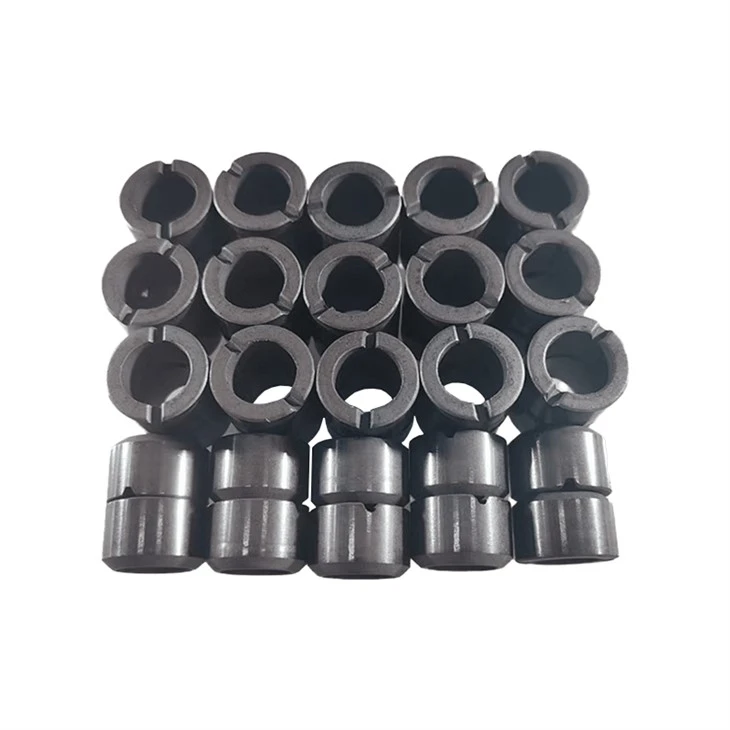
Ferrite is brittle, has no metallic luster, and is easy to process; NdFeB has a silvery-white metallic luster, but is fragile and requires precision processing.
3. Cost and economy
Price
Ferrite has abundant raw materials, simple process, and low price; NdFeB has a significantly higher price due to the high cost of rare earth and complex process.
Cost-effectiveness
NdFeB has strong magnetism per unit volume and is suitable for miniaturized equipment; ferrite has high cost-effectiveness and is suitable for scenes with low magnetic requirements.
4. Application fields
NdFeB
High-end fields: new energy vehicle motors, aerospace equipment, medical instruments, high-performance sensors, etc.
Ferrite
Medium and low frequency scenes: speakers, small motors, electronic toys, household appliances, etc.
| 5. Summary and Selection Suggestions | ||
| Features | Ferrite magnets | NdFeB magnets |
| Magnetic force | Weak (800-1000 Gauss) | Extremely strong (over 3500 gauss) |
| Heat resistance | Excellent | Ordinary type is weaker, can be improved after special treatment |
| Cost | Low | High |
| Applicable scenarios | Low frequency, normal environment | High frequency, high performance, miniaturized equipment |
| Stability | High (oxidation resistance) | Surface protection required |