

Hey there, fellow magnet enthusiasts! As a supplier of Ferrite Magnets, I often get asked about the coercivity of these amazing magnets. So, I thought I'd take some time to break it down for you in a way that's easy to understand.
First off, let's talk about what exactly coercivity is. Coercivity is a measure of a magnet's ability to resist demagnetization. In simpler terms, it's how hard it is to make a magnet lose its magnetic properties. You can think of it like a magnet's "staying power."
For Ferrite Magnets, coercivity is a crucial characteristic. Ferrite Magnets, also known as ceramic magnets, are made from a combination of iron oxide and barium or strontium carbonate. They're widely used in all sorts of applications because they're relatively inexpensive, have good corrosion resistance, and offer decent magnetic performance. You can find more about Ferrite Magnets here.
There are two main types of coercivity when it comes to magnets: intrinsic coercivity and coercive force. Intrinsic coercivity (Hci) refers to the magnetic field strength needed to reduce the internal magnetization of a magnet to zero. It's a measure of the magnet's strength at the atomic level. On the other hand, coercive force (Hc) is the magnetic field strength required to reduce the magnetic flux density of a magnet to zero on its hysteresis loop.
In the case of Ferrite Magnets, the coercivity values can vary depending on a few factors. The composition of the ferrite material plays a big role. For example, strontium ferrite magnets typically have higher coercivity compared to barium ferrite magnets. The manufacturing process also affects coercivity. Things like the sintering temperature and the grain size of the ferrite particles can influence how well the magnet resists demagnetization.
Let's take a look at some real - world applications where the coercivity of Ferrite Magnets matters. One of the most common uses is in electric motors. Motors rely on the magnetic fields created by magnets to convert electrical energy into mechanical energy. In an industrial automation motor, for instance, Ferrite Magnets for Industrial Automation Motor need to have a high enough coercivity to maintain their magnetic field over time. If the coercivity is too low, the magnet could demagnetize under the influence of the motor's operating conditions, such as high temperatures or strong external magnetic fields. This would lead to a decrease in motor efficiency and performance.
Another application is in speakers. Ferrite Magnets are often used in speaker systems because they can provide a stable magnetic field. The coercivity of these magnets ensures that the magnetic field remains consistent, which is essential for producing high - quality sound. If the magnet were to demagnetize, the speaker's sound quality would deteriorate, and you'd start to hear distortion or a loss of volume.
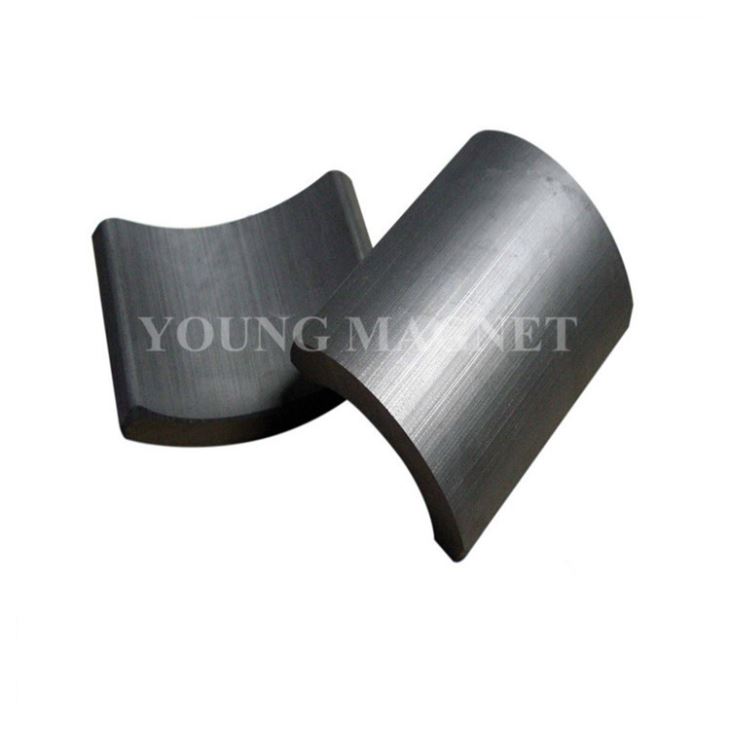
Arc Ferrite Magnets, which you can learn more about here, are also used in various applications where their shape and coercivity are important. They're commonly used in magnetic separators, where they need to maintain their magnetic field to attract and separate ferrous materials from non - ferrous ones.
Now, let's talk about how we, as a Ferrite Magnet supplier, ensure the right coercivity for our products. We have a strict quality control process in place. First, we carefully select the raw materials. We source high - quality iron oxide and the appropriate barium or strontium carbonate. Then, during the manufacturing process, we closely monitor all the parameters, such as the mixing ratio, the pressing pressure, and the sintering temperature. By controlling these factors, we can achieve the desired coercivity for different types of Ferrite Magnets.
We also conduct extensive testing on our products. We use specialized equipment to measure the coercivity, along with other important magnetic properties like remanence and energy product. This way, we can guarantee that our Ferrite Magnets meet the highest standards and perform well in their intended applications.
If you're in the market for Ferrite Magnets, it's important to consider the coercivity based on your specific needs. If you're using the magnets in a high - temperature environment, you'll need magnets with a higher coercivity to prevent demagnetization. On the other hand, if cost is a major factor and the operating conditions are less demanding, you might be able to get away with magnets having a slightly lower coercivity.
As your trusted Ferrite Magnet supplier, we're here to help you choose the right magnets for your project. Whether you need Arc Ferrite Magnets for a magnetic separator or Ferrite Magnets for an industrial automation motor, we've got you covered. We have a wide range of products with different coercivity values to suit various applications.
If you're interested in learning more about our Ferrite Magnets or have any questions regarding coercivity or other magnetic properties, don't hesitate to reach out. We're always happy to have a chat and help you find the best solution for your needs. Let's start a conversation about your procurement requirements and see how we can work together to make your project a success.
References:

- "Magnetic Materials: Fundamentals and Applications" by E. C. Snelling
- Various industry research papers on ferrite magnet properties and applications