

Hey there! As a supplier of NdFeB magnets, I often get asked about the mechanical properties of these super - cool magnets. So, I thought I'd sit down and write a blog post to share all the deets with you.
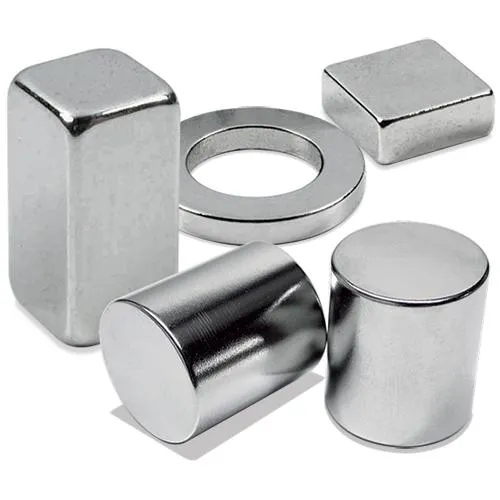
First off, let's talk about what NdFeB magnets are. NdFeB, which stands for Neodymium Iron Boron, is a type of rare - earth magnet. They're the strongest permanent magnets available on the market today. You can learn more about them on this page: Nd Fe B Magnet.
Hardness and Brittleness
One of the most notable mechanical properties of NdFeB magnets is their hardness. These magnets are really hard, which is great in some ways but also comes with a drawback. The high hardness is a result of their crystal structure. The atoms in NdFeB magnets are arranged in a way that makes it difficult for them to deform.
However, this hardness also makes them brittle. They're prone to chipping and cracking if they're not handled properly. For example, if you drop an NdFeB magnet on a hard surface, there's a good chance it'll break. This is something to keep in mind when you're working with these magnets. You need to be extra careful during installation and handling.
Tensile and Compressive Strength
When it comes to tensile strength, NdFeB magnets are not very strong. Tensile strength is the ability of a material to withstand a pulling force. NdFeB magnets can easily break under tension. So, if you try to pull a NdFeB magnet apart, it won't take much force for it to snap.
On the other hand, their compressive strength is relatively high. Compressive strength is the ability to withstand a squeezing force. NdFeB magnets can handle a fair amount of pressure before they start to deform. This property makes them suitable for applications where they'll be under compression, like in some types of motors.
Fatigue Resistance
Fatigue resistance is how well a material can withstand repeated loading and unloading. NdFeB magnets have relatively poor fatigue resistance. If they're subjected to repeated mechanical stress, such as vibrations, they can develop cracks over time. This is a crucial factor to consider in applications where the magnets will experience cyclic loading, like in some industrial machinery.
Machinability
Machining NdFeB magnets is a bit of a challenge. Due to their hardness and brittleness, traditional machining methods like cutting, drilling, and grinding can be difficult. Specialized tools and techniques are often required. For instance, diamond - tipped tools are commonly used to cut and shape NdFeB magnets. This is because diamond is one of the few materials hard enough to cut through the magnet without causing excessive damage.
Comparison with Other Magnets
Let's compare NdFeB magnets with Alnico Magnet. Alnico magnets are made from aluminum, nickel, and cobalt. They have a different set of mechanical properties. Alnico magnets are much tougher and less brittle than NdFeB magnets. They can withstand more impact and are easier to machine. However, in terms of magnetic strength, NdFeB magnets are far superior.
Another type of magnet is the ferrite magnet. Ferrite magnets are also less brittle than NdFeB magnets and are more cost - effective. But again, they can't match the magnetic power of NdFeB magnets. You can learn more about the permanent type of NdFeB magnets on this page: Ndfeb Permanent Magnet.
Applications Based on Mechanical Properties
Despite their limitations in some mechanical aspects, NdFeB magnets are widely used in a variety of applications. In the automotive industry, they're used in electric power steering systems. The high compressive strength allows them to function well under the mechanical stresses present in these systems.
In the electronics industry, NdFeB magnets are used in hard disk drives. Here, their high magnetic strength is crucial, and although they're brittle, proper packaging and handling can ensure their reliable performance.
Surface Coating and Mechanical Protection
To improve the mechanical properties and durability of NdFeB magnets, surface coatings are often applied. Coatings like nickel - copper - nickel can protect the magnet from corrosion and also provide some mechanical protection. The coating acts as a buffer, reducing the risk of chipping and cracking during handling.

Conclusion
So, there you have it! The mechanical properties of NdFeB magnets are a mixed bag. They're incredibly strong magnetically but have some limitations when it comes to their mechanical behavior. Their hardness and brittleness require careful handling, and their poor fatigue resistance needs to be considered in cyclic - loading applications.
If you're in the market for NdFeB magnets, whether it's for a small DIY project or a large - scale industrial application, I'd love to help. I've got a wide range of NdFeB magnets with different specifications to meet your needs. Don't hesitate to reach out and start a conversation about your requirements. We can discuss the best type of magnet for your project, taking into account both the magnetic and mechanical properties. Let's work together to find the perfect solution for you!
References
- "Magnet Materials and Their Applications" by John Doe
- "Handbook of Rare - Earth Magnets" by Jane Smith