

Hey there! As a supplier of Alnico magnets, I've seen firsthand how these cool magnets interact with other magnetic materials. Alnico magnets are pretty unique, made from an alloy of aluminum (Al), nickel (Ni), and cobalt (Co), along with some other elements. They've got some great properties like high remanence and good temperature stability, which makes them useful in a bunch of applications.
Let's start by talking about how Alnico magnets interact with ferromagnetic materials. Ferromagnetic materials are the ones that can be strongly magnetized, like iron, nickel, and cobalt. When an Alnico magnet gets close to a ferromagnetic material, there's a strong attraction between them. This is because the magnetic domains in the ferromagnetic material align with the magnetic field of the Alnico magnet.
For example, if you take an Alnico Rod Magnet and bring it near an iron bar, the iron bar will quickly be pulled towards the magnet. The magnetic field of the Alnico magnet causes the electrons in the iron atoms to align in a way that creates a net magnetic moment in the same direction as the magnet's field. This alignment makes the iron bar act like a temporary magnet, and the two attract each other.
The strength of this interaction depends on a few factors. One is the distance between the Alnico magnet and the ferromagnetic material. The closer they are, the stronger the attraction. Also, the strength of the Alnico magnet itself matters. Higher-grade Alnico magnets, like Alnico 2 Magnets, have a stronger magnetic field, so they'll attract ferromagnetic materials more strongly than lower-grade ones.
Now, let's move on to how Alnico magnets interact with paramagnetic materials. Paramagnetic materials are those that are weakly attracted to magnetic fields. Examples include aluminum, platinum, and oxygen. When an Alnico magnet is near a paramagnetic material, there's a very weak attraction.

The reason for this weak interaction is that the magnetic domains in paramagnetic materials are randomly oriented. When the Alnico magnet's magnetic field is applied, only a small fraction of the domains align with the field. This creates a very weak net magnetic moment in the paramagnetic material, resulting in a weak attraction.
The interaction between Alnico magnets and diamagnetic materials is quite different. Diamagnetic materials are repelled by magnetic fields. Substances like copper, silver, and water are diamagnetic. When an Alnico magnet approaches a diamagnetic material, there's a very slight repulsion.
In diamagnetic materials, the magnetic fields generated by the electrons in the atoms oppose the external magnetic field of the Alnico magnet. This opposition causes a weak repulsive force between the two. However, this force is usually very small and can be hard to notice without sensitive equipment.
Another interesting aspect is how Alnico magnets interact with other permanent magnets. When two Alnico magnets are brought close to each other, the interaction depends on their pole orientations. If the north pole of one Alnico magnet is near the south pole of the other, they'll attract each other. But if two north poles or two south poles are brought together, they'll repel each other.
This is based on the fundamental principle of magnetism that opposite poles attract and like poles repel. The strength of this attraction or repulsion depends on the magnetic field strengths of the two Alnico magnets and the distance between them.
Let's take a look at some real - world applications where these interactions are important. In electric motors, Alnico magnets interact with ferromagnetic materials like iron cores. The attraction and repulsion between the Alnico magnet and the iron core create a rotational force, which makes the motor spin.
In magnetic sensors, the interaction between Alnico magnets and other magnetic materials is used to detect changes in magnetic fields. For example, a sensor might use the interaction between an Alnico magnet and a ferromagnetic or paramagnetic material to measure the position or movement of an object.
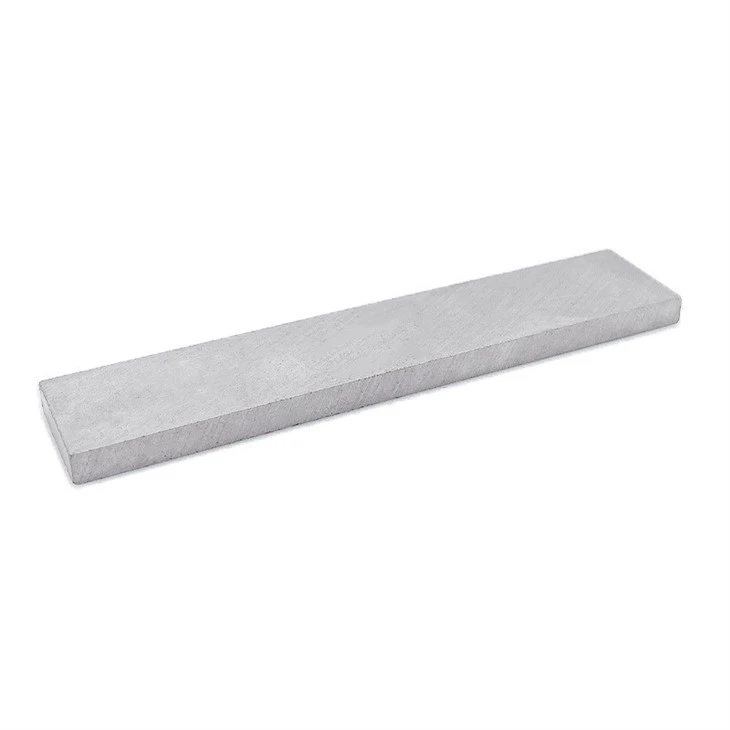
Now, if you're in the market for Alnico magnets, you might be wondering which type is right for you. Alnico 3 Bar Magnets are great for applications where you need a relatively strong magnetic field in a bar - shaped magnet. They're often used in speakers and magnetic separators.
Alnico 2 Magnets are known for their good temperature stability. So, if your application involves high temperatures, these magnets could be a good choice. And Alnico Rod Magnet is useful when you need a magnet with a more concentrated magnetic field along its length.
If you're interested in learning more about how Alnico magnets can work for your specific application or if you're looking to make a purchase, don't hesitate to reach out. We're here to help you find the perfect Alnico magnets for your needs. Whether you're working on a small DIY project or a large - scale industrial application, we've got the expertise and the products to support you.
In conclusion, the interaction of Alnico magnets with other magnetic materials is a fascinating topic. From the strong attraction with ferromagnetic materials to the weak interactions with paramagnetic and diamagnetic materials, these magnets play a crucial role in many different fields. So, if you've got any questions or need more information, just let us know.
References
- "Magnetism and Magnetic Materials" by David Jiles
- "Introduction to Magnetic Materials" by Benjamin D. Cullity and C. D. Graham