

Yo, what's up everyone! I'm a supplier of Ndfeb magnets, and today I wanna chat about how these awesome magnets are used in magnetic levitation trains. It's a super cool topic, and I'm stoked to share some knowledge with you.
First off, let's talk a bit about Ndfeb magnets. These are some of the strongest permanent magnets out there. They're made of neodymium, iron, and boron, hence the name Ndfeb. They pack a real punch in terms of magnetic strength, and that's what makes them so useful in all sorts of high - tech applications, especially magnetic levitation trains.
So, how do magnetic levitation trains work? Well, the basic idea behind maglev trains is to use magnetic forces to lift the train off the tracks, reducing friction to almost zero. This allows the trains to reach incredibly high speeds. And that's where our Ndfeb magnets come into play.
One of the key ways Ndfeb magnets are used is in the levitation system. In a maglev train, there are two main types of levitation: electromagnetic suspension (EMS) and electrodynamic suspension (EDS). Let's start with EMS.
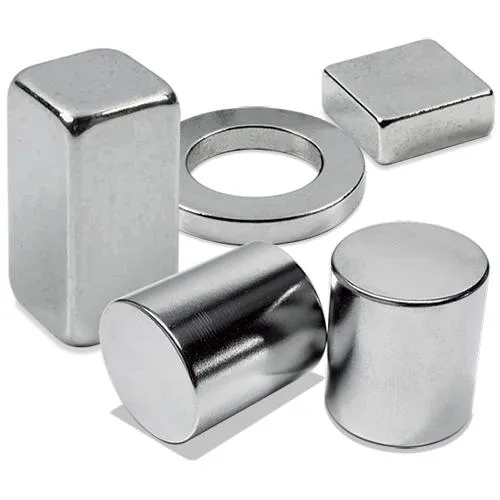

In an EMS system, the Ndfeb magnets are placed on the train and interact with the ferromagnetic tracks. The magnetic field from the Ndfeb magnets creates an attractive force between the train and the track. This force is carefully controlled to keep the train at a constant height above the track. The strength of the Ndfeb magnets is crucial here. If the magnets weren't strong enough, the train wouldn't be able to lift off the track properly. And since Ndfeb magnets are so powerful, they can generate the necessary magnetic force with a relatively small size. This helps in keeping the train lightweight, which is important for achieving high speeds.
Now, let's move on to EDS. In an EDS system, the Ndfeb magnets are used on both the train and the guideway. When the train moves, the changing magnetic field from the Ndfeb magnets on the train induces electric currents in the coils on the guideway. These induced currents create their own magnetic fields, which interact with the magnetic field of the Ndfeb magnets on the train. The result is a repulsive force that lifts the train off the track.
The advantage of using Ndfeb magnets in an EDS system is that they can generate a very strong and stable magnetic field. This is essential for maintaining a consistent levitation height, even at high speeds. And because of their high coercivity, Ndfeb magnets can resist demagnetization, which is important considering the high - speed and high - energy environment of a maglev train.
Another important aspect of maglev trains is the propulsion system. Ndfeb magnets also play a vital role here. The propulsion system of a maglev train works on the principle of linear motors. A linear motor is like a rotating motor that has been "unrolled." The Ndfeb magnets are used to create a magnetic field, and the interaction between this magnetic field and the electric currents in the coils on the guideway generates a thrust force that moves the train forward.
The high magnetic strength of Ndfeb magnets allows for a more efficient propulsion system. With stronger magnets, the train can generate more thrust with less energy consumption. This not only makes the train more environmentally friendly but also more cost - effective in the long run.
Now, let's compare Ndfeb magnets with other types of magnets that could potentially be used in maglev trains. For example, Alnico Magnet. Alnico magnets have been around for a long time and are known for their good temperature stability. However, they are not as strong as Ndfeb magnets. In a maglev train, where high magnetic strength is crucial for levitation and propulsion, Alnico magnets just don't cut it.
Another option could be Boron Magnet. But again, when it comes to the combination of high magnetic strength, small size, and cost - effectiveness, Ndfeb magnets are the clear winner.
One of the most popular types of Ndfeb magnets used in maglev trains is Sintered Neodymium. Sintered neodymium magnets are made through a special manufacturing process that gives them their high magnetic properties. They can be customized to fit the specific requirements of a maglev train, whether it's the shape, size, or magnetic orientation.
As a Ndfeb magnet supplier, I've seen firsthand the importance of these magnets in the development of maglev trains. The demand for high - quality Ndfeb magnets in the maglev industry is only going to increase as more countries invest in this high - speed transportation technology.
If you're involved in the maglev train industry or any other high - tech field that requires strong permanent magnets, I'd love to have a chat with you. Whether you need advice on the right type of Ndfeb magnet for your project or you're looking to place an order, I'm here to help. Just reach out, and we can start discussing how my Ndfeb magnets can meet your specific needs.
In conclusion, Ndfeb magnets are the unsung heroes of magnetic levitation trains. Their high magnetic strength, small size, and cost - effectiveness make them the ideal choice for levitation, propulsion, and other critical systems in maglev trains. As the technology continues to evolve, I'm excited to see how Ndfeb magnets will play an even bigger role in the future of high - speed transportation.
References
"Magnetic Levitation Technology: Principles and Applications"
"Neodymium Magnets: Properties and Industrial Uses"